Saturday, September 8, 2012
Back to Samoa for a Visit


Monday, July 19, 2010
Sekia!
That evening we went to Poutasi. It was difficult to see the village so changed. Our family house was very badly damaged, but part of the rear portion remains, with intact plumbing in the bathroom. So the family has been living in that part of the house. All the windows and some of the walls were blown out in the tsunami, so it’s open on three sides, although they have put up boards to provide some shelter. They are building a new house in the village, on higher ground. It is nearly complete, but still didn’t have plumbing during my visit, so they weren’t living there yet. Saina (the mom in my host family) will have an indoor kitchen sink and a four burner stovetop for the first time ever. But they also plan to rebuild the old house as a place to come by the sea, and for guests and family. There are numerous new houses in the village, mostly on the mountain instead of by the sea where they used to be, and lots of open space where houses once stood.
My visit brought closure for me in more ways than I expected. It helped to be able to see the village, changed as it is, and accept it as it now stands, and to mourn the loss of my friends. But unexpectedly I found some closure to my Peace Corps experience. When I first got to Samoa in 2007, I wrote in my journal that “. . . my only real concern is whether I will be able to accomplish a worthwhile project in my village when I get there.” So to return and sense some measure of accomplishment, and know that I made a small difference, is a good feeling.
When I returned to Poutasi, I learned that the Homework Center continued successfully after I left. On weekends it was a busy place where the children continued to come and do homework and spend time on the computers. Some of the village teachers staffed it. It’s hard for Samoan kids to do homework at home – there are always chores that they are asked to do, little brothers and sisters to baby-sit, etc. At the homework center they could come and work together in a place set aside for that purpose. And the little kids could come too and color, do puzzles, etc., like they did while I was there.
And here’s one of the coolest things. In the new church hall, under construction, there is planned a new homework center. It will be bigger and better and air conditioned. They will continue to welcome kids from Poutasi and the neighboring village to come and do homework and use the computers for free (with charges only for printing and copying). I can hardly express how delighted I am that this little project is continuing.
So I was really excited to give the money that I took with me from your generous gifts ($500 US), to the Poutasi Homework Center. One of the Peace Corps office staff also raised $1,300 US that she wants to be used for the kids in Poutasi. I introduced her to Saina, and the day after I left they met to begin planning a fun day for the kids in September where they will have crafts, games, prizes, food, music, and dancing, I wish that I could be there! A portion of that money will also go to the Poutasi Homework Center. Later, when the construction on the church hall is complete, and the homework center is ready to re-open, I’ll send some books, puzzles, etc. to replace some of what was lost in the tsunami. (A couple of you have said that you would still like to contribute – you could help me buy stuff for a box to send later.)
I am absolutely delighted with how this has turned out! There will be a new community internet center in the village, but the kids can still have the opportunity they had before. They can still have free computer time; they can come to do homework together; they will have a learning space. The Poutasi Homework Center will continue.
Sunday, May 23, 2010
Return to Samoa
As I mentioned previously, I’ve been trying to raise some money to help with a new computer center in my village which is going to be in the old headmaster’s house near the high school. I’m blessed with so many great friends; I’ve received $565 in the mail. But that’s not the only amazing thing.
There is a Peace Corps volunteer (Erica) who is still in Samoa who lived in a village several miles down the road from Poutasi. I say lived, because she literally out ran the tsunami when it swept into her village, and the house where she was living was destroyed. Through her help and an organization called Peace Corps Partnership we have raised an additional $2,700! The money is intended to help purchase some equipment for the computer center. It should buy at least two copier/printer machines. I can’t say fa’afetai (thank you) enough to everyone who helped out.
It’s been eight months since the tsunami. I’m looking forward to seeing everyone there, but I’m apprehensive about seeing the village. It will forever be in my memory as it was before the tsunami, especially since that’s the way it was during my Peace Corps experience. But it will never be that way again, and I have to get used to that idea too.
I’ll send an update from Samoa. Maybe this will be the stimulus I need to take my 300+ page journal, written while I was in Peace Corps, and turn it into something that people might want to read, or maybe just a memoir for me and my family.
As always, thanks for your interest and your support.
Monday, March 8, 2010
Village Clean-Up
Tsunami clean-up begins
Sunday, 07 March 2010
Hundreds of volunteers, supported by the expatriate Australian community (and the odd Kiwi) turned up at Poutasi yesterday for the start of the tsunami clean-up.
Teams scoured the mangroves, waded through the lagoon and scrambled over the rocks to rescue the reef and retrieve tonnes of debris and other rubbish.
Led by MNRE and with the support of DMO, Fire and Emergency Services, the Red Cross, the crew from MV NAFANUA and the matai of Poutasi, the clean up was declared a big success.
“It was a wonderful day and proved that, occasionally, people power can match the destructive force of nature,” said Australian High Commissioner Matt Anderson.
“It was also a reminder that Australia (and Australians) stand ready to assist Samoa wherever and whenever there’s a need.”
Thursday, January 28, 2010
A New Computer Center For Poutasi
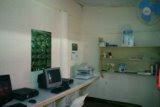
After the tsunami in Samoa I mentioned that I would like to organize an effort to help my village of Poutasi, especially the kids in the village. One of my major projects in the village was the homework/computer center. We turned a storeroom in the rear of the church hall into a small computer center (see photos on the right side of this blog). We had three donated used computers, and one laptop. We got a grant from the New Zealand High Commission of approximately $2,000US, which we used to purchase a printer and pay for some of the renovation cost. The village provided labor and the remainder of the materials.
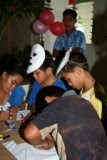
It was in this small center that I spent two or more afternoons a week and Saturday mornings with the kids teaching them to use the computers, helping them with school work, and providing a learning place for them to hang out. Often there would be 12 or 15 kids waiting for me when I got there. They would double up and sit two in front of each computer. While waiting for their turn, they sat on the floor and colored, did puzzles, read books, or played games. Thanks to generous donations from friends in the States, we were able to provide these educational materials for them.

I taught the kids basic computer skills and installed educational games on the computers. There were mouse practice games, typing games, and math and language games. They loved it and it was such a joy to see them there. Some days I would be tired and think, “I don’t want to go to the computer center this afternoon.” Then I would go and spend two or three hours and be totally energized by being with them.
The church hall was badly damaged in the tsunami. It’s structurally unsound and is being demolished. However, often there is opportunity in crisis. There is a two-story house that at one time was the headmaster’s house for the school when they sent teachers to Samoa from New Zealand. While I was living in the village, Tuatagaloa Joe and his wife, Tui (Joe is my family’s chief and high chief of the village, and Tui was my dear friend and cousin who was killed in the tsunami), talked to me about using that house to create a “real” computer center. If I had been able to stay longer in Samoa I would have worked toward that goal. I had initial conversations with some folks about it, but that was all that I was able to accomplish while I was there.
Now, after the tsunami, a group of young men from New Zealand have come to the village to help, and they are remodeling and restoring the house for a computer center. There will be a small apartment upstairs so that someone can live above the computer center to provide supervision and security. And it is on the main road so there is a phone line nearby making it possible for them to be on the internet (my little computer center wasn’t on the net).
Tuatagaloa Joe will be sending me some photos and more details on the renovation progress soon. I’ll post that information as soon as I get it.
Many people have told me that they would like to make a donation, so I’m working to raise some funds to help make this new computer center a reality. If you would like to help Poutasi in this way, you can contact me at kona_malia@yahoo.com. Fa’afetai tele lava! (Thank you very much!)
Thursday, December 31, 2009
HAWAI'I CALLS
Friday, December 25, 2009
Back to the Islands
Manuia le Kirisimasi, Mele Kalikimaka, Merry, Merry Christmas to all!
Life Goes On
Dear Donna,
Sorry for delaying in replying your Email. Kids are very happy with
their gifts. We also very happy and would like to thank you very much
indeed for all this you have done for us. Hemara is very like to write to you.
Regarding Tsunami, We are now starting to plan for a new house at the
roadside. I am trying to get some money loan from the Bank to add on the
assistance given by the government, then probably starting the
construction work by next month.
Best regards from Saina, Hemara, Tia and Fetu
Tofa Soifua
Lesaisaea Niualuga
When a Peace Corps volunteer in Samoa is assigned to a village, it’s the responsibility of the village to provide a place for the volunteer to live. I had initially been told, as I had requested, that I would have a place by myself. I was dismayed to learn just a few days before I went to Poutasi that I would be living with a family in the village.
As a group of 16 volunteers we had gone through training together for three months. Then we were taken to our individual villages. I vividly remember that day when we arrived in Poutasi and I was introduced to my Samoan family. Then the Peace Corps vehicle drove away and there I was. In a strange house, with people I didn’t know. I don’t know that I’ve ever felt so alone.
But sometimes we don’t know what’s best for us. When it was time to come back to the States the next year, it was so hard to leave my Samoan family. We hugged and kissed and cried together. I know for a fact that my experience there was enriched immensely by having been a part of this family.
In Samoa, as in all of Polynesia, if you are related by blood (even the remotest cousin), or by adoption (formal or otherwise), or by marriage, or by simply being welcomed into the family, you are family, now and forever.
I lived in Poutasi with Lesaisaea Niualuga Evaimalo, his wife, Saina, and their children. Saina’s father, Tuatagaloa Te’o Fetu, was high chief of Poutasi and the Falealili District (12 villages on the southern coast of the Island of Upolu) for decades. When he passed away in the 1990’s, the family chose a new matai (chief), Joe Annandale, who then became Tuatagaloa Joe Annandale. The Annandale ancestor came to Samoa from Scotland, and in 1873 married a Samoan princess, the niece of King Malietoa.
In Samoa there is what is known as “customary land.” Every Samoan family has a swath of land that runs from the sea to the mountain which has been their family’s land for hundreds of years. They don’t have title to it; they can’t sell it or lease it. It’s the family land. Usually several households live on the family land in individual houses. One family in Poutasi had over 50 family members living together in different houses, including the 80-year-old matriarch of the family and her children and their children and their children.
As I said, Saina’s father was the Tuatagaloa high chief for many years. After her father’s death, her mother moved to Apia to live with family there. Saina married Niu and they now live in the family house in Poutasi where I stayed. Tuatagaloa Joe, the current high chief, and his wife Tui lived in their house next door.
Saina and Niu's have six children. Three of them lived with us in Poutasi. Their oldest daughter is grown with a family of her own. Son Stephen is attending high school in California and lives with family there, and daughter Aileen lived with her aunt and uncle in Apia. Throughout Polynesia children are commonly entrusted to relatives. In America we associate foster parenting or adoption with something gone wrong. In Samoa it's like a redistribution of children, to those with no children, or to a family who might be able to provide more ample means of support. These transfers of children aren’t absolute, and although the fosterage may last for years, they don’t permanently separate the children from their biological parents, who have a deep and lasting commitment to their children. It’s hard for us to understand, and likewise, the thought that we have orphanages is appalling to Samoans.
(Aileen is now attending Alabama State University in Montgomery on scholarship and I was able to spend some time with her when visiting my son in Atlanta for Thanksgiving.)
The younger children in our family, Hemara, Tia, and Fetu, lived with us in Poutasi. Hemara and Tia, attended St. Mary’s Primary School, a private school in Apia. Hemara turned 11 soon after I got there and is now 13. She and I became especially close. Youngest son, Fetu, has a learning disability (Saina has diabetes, which was diagnosed during her pregnancy with Fetu, and such high risk pregnancies often result in developmental delay, learning difficulties and ADHD). When I first came to the village, Fetu, at age 7, was not attending school at all. They had tried to send him to the local school, but teachers in Samoan village schools don't have the training to deal with such a situation. I encouraged and worked with Saina, and we were able about one year later to get Fetu into a private school in Apia, where he would get the extra help he needed. It’s very fortunate that the family has the resources to send the children to private schools. If not, Fetu would just not have gone to school.
My Samoan family is wealthy by Samoan standards. Saina’s family owns a bakery, small grocery store, and restaurant in Apia. Saina works at the store. Niu was originally from another village. (In Samoa you don’t marry someone from your own village.) He got his Bachelor’s degree from the University of the South Pacific in Fiji in Environmental Science. When I first arrived in the village, Niu was in charge of the National Park in Samoa. While I was there he got a promotion and he is now head of Waste Management for the Ministry of Natural Resources and Environment. Joe and Tui owned Sinalei (http://www.sinalei.ws/), a small resort a few miles away, which was a real treat for me to visit occasionally. (Both the Ministry and the resort have internet access so we can continue to keep in touch via email.)
Because of the wealth and the status of my Samoan family, I felt kind of guilty at first that my life was cushier and more comfortable than most of the other Peace Corps volunteers in country. But after a time, I realized that this was my Peace Corps experience, and other volunteers would have a different experience, and that was okay.
And of course it’s all still relative. We lived in one of the nicest houses in the village. But we still had no hot water, and cold water intermittently. The family did most of the cooking over an open fire in the cookhouse out back, since we had only a one-burner propane cook top in the house, and no stove. We had a refrigerator when I first moved there, but it died about three months before I left and hadn’t been replaced yet. The laundry was done either at the sink, which was outside next to the house, or in buckets in the shower stall.
Well, I digress. My Samoan family is doing well under the circumstances. Joe is recovering from his injuries and plans to repair and reopen Sinalei by April 2010. Tui will be missed forever, but Joe has a lot of family support. I talked to Niu and Saina by telephone several days after the tsunami. Their new house will be located on family land away from the ocean front and along the government road slightly higher in elevation. The children are doing well. Saina said that Hemara was angry because she had written a letter to me which hadn’t yet been mailed, and it was washed away.
I haven’t worked out the details yet, but I am continuing to plan to raise some money to reopen the homework center/computer center. I was so pleased that they had kept it going after I left, and even added another room for a quiet study area and library. If I could raise enough money (probably about $2,000 to do repairs and replace the computers), I’d like to go back for a few weeks next spring or summer and set it up again. I’m waiting to hear back from Joe and Niu about the structural integrity of the church hall. The computer center was in the back of the building; the front was badly damaged. There is one other building in the village that is a possible location, but it would need much more repair.
Geography Postscript
After the tsunami I had questions from a number of you about the size of the Samoan Islands. Here’s a bit of information about Samoa and American Samoa. The eastern group of islands, the territory of American Samoa, has a population of about 55,000. The total land area of American Samoa is 77 square miles made up of seven very small islands. The largest island (Tutuila) has a land area of 57 square miles. It also has a large natural harbor (Pago Pago), which is why the United States wanted it for a naval re-fueling station.
Forty-miles away is the independent country of Samoa (formerly known as Western Samoa) with a total population of about 188,000 and a total land area of 1,133 square miles. Comparatively, the area occupied by Samoa is slightly smaller than the State of Rhode Island. There are four inhabited islands. I lived on the Island of Upolu which is 430 square miles. It’s the most populated island and second largest island, 47 miles long and 15 miles wide. There is one city on the island, Apia (pop. 61,900), which is really an agglomeration of small villages. Seventy percent of the population lives in small villages on the coast.
Sunday, October 25, 2009
Filipo in Happier Times


New Posts to Come
It's been an interesting year. A good year with lots of travels - but not in the South Pacific. There is definitely a readjustment process returning home from Peace Corps.
I'll be back in Hawaii soon and will post more about all of the above and more.
Thursday, October 1, 2009
TSUNAMI IN SAMOA!!
By now most everyone has heard about the earthquake and tsunami that hit Samoa and American Samoa on Tuesday, September 29th. The quake, with a magnitude between 8.0 and 8.3, struck at 6.48 am Samoan time on Tuesday and locals said it lasted up to three minutes. According to news reports, eyewitnesses said that over the next 20 minutes there were four giant walls of water, between three and nine meters high.
It's very hard to get news. The phones don't work. But I have heard via email that my village of Poutasi was one of the hardest hit. Initial reports are that it was devastated, flattened. One Peace Corps volunteer in country says that there are possibly 50 dead in Poutasi (in a village of 325 people). I heard by email from the Peace Corps country director that one of my family members was killed. Her body was found washed up in a tree after she tried to help some children get to safety. I don't know yet if the others are safe.
It’s hard to describe to someone who hasn’t had the experience what it means to live in a Samoan village with a Samoan family for 18 months. You’re out of your comfort zone, far away from what you know. They take you in and love you. It was my village, my home, my family. I know everyone in the village and they know me. I was their pisikoa.
I’ve kept in touch with my Samoan family since I came back. The father of the family works for a government ministry and has email at his office. Hemara, the 12-year old daughter, who is very dear to me, sends me letters, and just last week I sent a box of gifts for the children in my family for White Sunday (Children’s Day – the second Sunday in October).
I'm a weeping mess. It will be a very hard day again today. I slept very little. Every time I closed my eyes I could only see my beautiful village as it was, and imagine what must have happened. And I see the children of the village, and know that their lives are changed forever.
PART II
Fa'afetai tele ia le Atua mo le puipuiga o lo'u aiga Samoa. (Thank God for the protection of my Samoan family.)
I was able to contact a Peace Corps volunteer in country who contacted Niu's workplace where someone said that Niu, Saina and the children are safe. Niu, Saina and the kids are the nuclear family in whose home I lived in Poutasi. Tuatagaloa Joe and his wife Tui are cousins who lived in the house next door to us. Joe is the chief of our extended family, and also the high chief of the village and the entire district made up of several villages. Joe is in the hospital in critical condition.
Tui was killed in the tsunami. She and I were good friends. She was close to me in age, of German and Samoan heritage. She was educated in New Zealand and spoke English very well. She had many "Western ways," and yet was thoroughly Samoan. We often sat on her deck overlooking the ocean and had a cup of tea together. She was very well known and respected throughout the islands. If you Google her name you will find much has been published already about her death. Here's an excerpt from one of them:
Former Miss Samoa Tui Annandale, wasn't one of the lucky ones. Annandale and her husband Joe were having morning prayers at home in the village of Poutasi when the earthquake struck. Annandale tried to flee the wave by car, but she was sucked out and drowned.
Tui's funeral, held on Wednesday night, was attended by Samoa's Prime Minister, the head of state and also former rugby player and relative, Peter Fatialofa.
Tui's friend Leiloa was on foot behind the car and miraculously lived. "The wave picked me up and threw me into the church. I held onto the pillar until the water passed," she says.
Wednesday, November 19, 2008
Home Is Where The Heart Is
Perhaps this will come as a surprise to some of you because I have tried to keep an optimistic outlook and upbeat attitude during my time here. But damn it’s hard sometimes! Peace Corps life is supposed to be a challenge and it is. But not in the ways that I thought it would be. Of course there are the language and culture challenges, which one expects. However, I would say that the biggest challenge has been the loneliness.
Even though I am surrounded by people who are kind and supportive here in my village, and even though there are other Peace Corps volunteers with whom I interact on a regular basis, it gets lonely. I miss having close friends and family nearby to laugh with, talk about the events of the day, and to share life with. When I was in Hawaii, even though I was in the middle of the Pacific Ocean, I had friends and family there. I had occasional visitors from the mainland, and I came back to Colorado to visit. And most of all, I could pick up my cell phone and talk to anyone for however long I wanted. That’s one of the hardest parts about being physically separated from friends and family. I’m lucky that I’m in Samoa at a time when there are internet connections and even cell phones here in country. That makes keeping contact much easier. But it’s prohibitively expensive to talk like we do back home. So I have conversations with my kids and my mother maybe once a month, all the time being aware of the cost and the time, and I try to keep up with others by email. It’s just not the same.
I will have accomplished what I came here to do – travel to new places, have an adventure, and hopefully make a positive contribution. I know that the kids whom I’ve taught in our little computer center will always remember me. Maybe as that funny old lady, but nonetheless, they will remember. And I can’t tell you how exciting and rewarding it is to see a 12-year old kid who had never seen a computer six months ago, walk into the center, turn on the computer, open up the program he wants to use, work on a project, open his file on the computer, save it, and move on to the next thing. Yesterday I had 20 kids there over the space of nearly three hours taking turns on our three computers.
My village of Poutasi is beautiful in many ways. Together we have done some positive things that hopefully will continue to evolve after I leave, but no matter how long I stayed I could never "finish" what I started. There would always be something more to do, even if I stayed here five years.
Mom’s surgery is scheduled for December 3, so I plan to come home by Thanksgiving. I'll continue to post blogs about my remaining time here in Samoa and the challenges as I adjust to life back in the States, which is part of my Peace Corps experience as well.
It will be good to be home.
Wednesday, October 8, 2008
A Tattoo!
 I got a tattoo. There are not many Polynesian words that have entered the English language, but perhaps the most widely used is tattoo. Exactly where and when the word "tattoo" originated is open to debate, but it is certain that it was a corruption of the Polynesian word tatau, picked up by the early European sailors exploring the Southern Ocean.
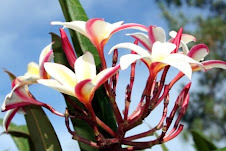
I suppose that this is a good time to tell you that my tattoo is a small frangipani flower on the back of my right shoulder. It is lovely, but not conspicuous, especially compared to traditional Samoan tattoos. Of course not every Peace Corps volunteer in Samoa gets a tattoo, but a significant number of every group do so. Our Peace Corps Medical Officer even has a particular tattoo shop that she recommends.
Most Peace Corps volunteers opt for something traditional in design, emulating the tattoos that Samoan men and
blog.jpg) women wear, though somewhat less extensive. And most volunteers get their tattoos using the traditional tattooing implements – pointed metal combs (made of bone in the old days) dipped in ink and tapped into the skin with a wooden mallet.
women wear, though somewhat less extensive. And most volunteers get their tattoos using the traditional tattooing implements – pointed metal combs (made of bone in the old days) dipped in ink and tapped into the skin with a wooden mallet.I had the tattoo artist use his electric instruments because I wanted color which can’t be done with the traditional tools. It’s light red and yellow, just like a frangipani flower, with a black border design. I went in with an idea of what I wanted, and together with the tattooist, we came up with the finished pattern. It took only about a half hour. And yes, it hurt, but more at first. You kind of get used to it as it progresses, and I quickly figured out that it helped to take my mind away from the fact that I was getting punctured with needles to something else more pleasant.
 Nearly all Samoan men and women have tattoos. It’s been part of their culture for centuries. Many have smaller tattoos, but the most traditional tattoos for men cover their bodies from their bellies to mid-thigh. The ink coverage is so extensive, and the design so intricate, that on first glance it looks like they are wearing very tight pants. The ships’ logs of many early explorers commented upon the presence of “britches” upon Samoan males. This type of tattoo is called a pe’a (pay´-uh) and needless to say it’s very painful. I’ve watched them do it. The master tattooist is assisted by up to six helpers all of whom wish to become masters themselves. One will be responsible for the mixing of the dyes, another is responsible for wiping away the blood, another for dipping the instruments into the dye and receiving instruments that have been used, another cleans and sharpens the teeth of the metal combs, and another will hold the skin tight. Young women sit by the person being tattooed, holding them down to stop them moving too much and massaging the head. It takes about 40 or 50 hours to do a traditional pe’a in several sessions. And yes, in case you’re wondering, it covers everything.
The tattoos applied to women are smaller and more delicate. The traditional ones cover an area wrapping around both thighs about ten inches in length. It’s called a malu.
It’s just one more thing that makes life in Samoa very interesting indeed.
Marine Project Update
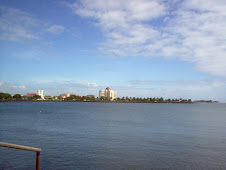
 I’ve written before about the beautiful ocean just a stone’s throw away from my house here in Poutasi. I spend a huge amount of time sitting by the sea in a small fale (fah´-lay) (a house with a peaked roof, often thatch, which is open on all four sides supported by posts). I read and write there. I talk to the kids who stop by. I watch the fishermen. I look at the always changing sea and clouds, and photograph sunset after sunset. I hardly know what I would do if I didn’t have that lovely place to sit and meditate and restore myself. Even in Samoa, some Peace Corps volunteers don’t have the ocean outside their back door.
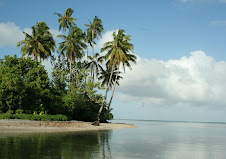
 changes from shades of aquamarine to deep blue, depending on the time of day. I can see fish swimming by while sitting in my chair. The lagoon in front of the village is protected by an an island an a barrier reef. While the ocean waves crash on the reef creating an omnipresent roar of the surf, the water inside the reef is calm and shallow. There is deeper water near the island, but the rest of the lagoon is only about waist deep. Inland there are mangrove marshes where fresh springs feed into the ocean.
 The really great news about that survey is that the coral inside the reef is healthy and recovering from previous damage. Much of the damage was from cyclones (hurricanes), but also from fishing with dynamite and poison in years past; that has since been outlawed. It’s great to see new coral polyps growing on the old dead coral. The mangrove marshes are also healthy with young mangrove trees growing naturally. And since coral and mangroves provide safe havens for small fish, it was also gratifying to see many small fish species too.
I won’t go into a lot of detail, but I’ve learned so much about the marine environment that I never knew. Mangroves are amazing trees that are not only part of the cycle of ocean life, but also protect the coastline from erosion and cyclone damage.
The original plan included coral gardening to restore the coral, cement fish houses (a space for the small fish to hide), and a mangrove nursery. Fortunately, we won’t need to do the coral gardening, fish houses, or the mangrove nursery; we just need to protect what we have.
After numerous meetings and delays, we have finally reached the point of marking the marine protected area (in Samoan fa’asao). An area is marked with cement anchors, ropes and floats, and also with upright sticks which are more visible. It is off-limits to fishermen, providing a protected area for the coral and the fish, clams, sea urchins, etc. – essentially a fish nursery. Some of the villagers were reluctant at first, thinking that it would reduce their ability to catch fish. But it was explained to them that the fish don’t know that the boundaries are there, and when they get big they will venture out from the reserved area and then they can catch them (and there will be more of them).
Now we are in the process of drafting a management plan for the project to be adopted by the village chiefs, and hopefully enforced. There will be fines paid to the village council if people fish in the protected area.
We also had a village cleanup this week which is technically part of the project. Poutasi is actually a pretty clean village compared to some others I’ve seen, but inevitably there is rubbish that accumulates. People burn their paper rubbish, but cans and plastics tend to accumulate in piles behind the houses. We provided bags (used 50 pound plastic flour bags) to everyone and told them to put the small items in the bags and put them on the road in front of their houses. Larger items such as old appliances and such could just be moved to the road. Then we had a truck come and pick up everything and take it to the landfill. The plan is for this to be an ongoing village activity once a month. Villagers also walked along the beach picking up rubbish that had accumulated there. We’ll be putting two large cages (about eight feet long and four feet high) on the two main roads in the village to hold recyclable plastic bottles to be picked up periodically.
The next major step is a five-day workshop in the village presented by a local non-profit, Small Business Enterprise Corporation. The main purpose of the workshop is to teach villagers how to set up and operate a small business in anticipation of some ecotourism projects in the village. This village has so much to offer. I visualize tourists in a hand-
 made outrigger canoe, paddled by a local guide who is telling them about this intricate beautiful ecosystem, silently slipping through the myriad channels of water with mangroves and giant ferns on all sides, hearing only the birds chirping and warbling. Then a trip to the uninhabited island with pristine beach and lush tropical foliage, where they can drink the water from a freshly picked coconut, eat a picnic lunch, swim and snorkel. Returning to the village they can be offered locally hand-made crafts to purchase. To the east and west of the village are popular tourist beaches and resorts. Nearly every tourist who rents a car drives down the road which intersects with the road into the village.
There are other aspects of the project yet to be completed – planting more native trees along the waterfront at the ocean and the natural springs to reduce erosion, and repairing a small water reservoir at one of the natural springs that no longer holds water.
Of course the plan is for all of this to continue long after I leave the village. I’m hopeful that it will not only create a source of viable income, but also help preserve and protect this wonderful place for future generations.
Tuesday, September 23, 2008
Time and Space
It differs for each volunteer – a few have their own apartments or houses – but most of us are in someone else’s home, and for every volunteer it’s always temporary. You know you’ll be going back with the two suitcases you came with and little else. In my case, I have a room in the house of a wonderful and kind family, but it’s not my space, and there’s only 290 square feet of it. That means that I have a lot of time and very little space.
Tuesday, September 9, 2008
G'Day Mate!

Thursday, August 21, 2008
The Other Samoa
One of the many benefits of serving in the Peace Corps is being able to visit other countries nearby. In July I went to Pago Pago [pronounced Pango Pango, with an “a” like in mama] in American Samoa for three days.
Many people thought I was going to the Peace Corps in American Samoa, since, if they had heard of the islands at all, it was probably American Samoa that they knew about. (American Samoa is an American territory and Peace Corps doesn’t send volunteers to American territories.) To explain the difference between the two Samoas and to set the stage for my visit, I’ll give you a brief history lesson.
During the days of colonization by western powers all over the world, Germany, Great Britain, and the United States all had interests in Samoa which was then one nation of 11 islands. In the 1850’s and 60’s, German merchants established thriving businesses exporting coconut oil and cotton. They developed many large coconut plantations, where coconut trees were planted in perfectly straight lines with proper separation between them to insure maximum yield. Cotton was planted between the rows of coconut trees. One of the families in my village has the surname of Wolfe. Their great-grandfather Wolfe, who married a local Samoan woman, built a western-style house in the village which has many typical European design touches. (They, however, live mostly in the traditional Samoan fale (a house that is open on all four sides with a thatched roof) that they’ve built next to it.)
In the 1830’s missionaries from the London Missionary Society came to Samoa. By the 1870’s, both Australia and New Zealand had become important British colonial outposts in the Pacific. Local British businessmen and government leaders in New Zealand were concerned about the expanding German influence in Samoa.
Meanwhile, although Americans had established some small businesses in Samoa, it was the United States Navy which took a larger interest. The major problems facing the steamers of the day were limited fuel capacity and lack of coaling stations along their routes. In 1871, Captain Wakeman reported that “Pago Pago was the best harbor in the South Pacific” and that the harbor was about to fall into German hands due to a lack of US interest in the Samoan Islands.
During this time, there was also a civil war on one of the main islands. The Germans seized the opportunity they saw and began trading guns for land.
In 1878, threatened by German authority and facing rebellion by rival factions, the Samoan leaders decided that continuance of their government could only be found under the protection of either the US or Great Britain. Samoan delegates were sent to Fiji and Washington, DC. The delegates were warmly received in Fiji, but the Great Britain representatives there could give the Samoans nothing but personal support for their government. The delegate to Washington fared much better. The result of his visit was a treaty between the US and Samoa providing peace and friendship between the two countries for ten years and it included these important provisions: 1) it was renewable, and 2) it confirmed the right of the US to establish a naval station at Pago Pago.
Fast forward to 1899. German interests in Samoa were too big – and too important – to be allowed to fall under British or American influence. After years of conflict and civil war, which were complicated by support of various local factions by the three foreign powers, in 1899 a decision was agreed upon between all three nations. The US accepted the seven small islands of “Eastern” Samoa; the remaining four islands were to come under German control; and Great Britain relinquished all official claims and accepted in return Germany’s rights in Tonga, the Solomon Islands, and West Africa. The Samoans of these eastern islands, to be known as American Samoa, who had asked over 20 years before to be a protectorate of the US, responded with a Deed of Cession.
On August 6, 1914, German Samoa’s governor learned via wireless that war had begun in Europe. He and his administration decided not to resist an invasion by British forces, as he knew Samoan loyalty to the German interests was doubtful. That same day a telegram was sent to New Zealand’s governor to seize Samoa. British and French battle cruisers entered Apia harbor on August 29th. Not a single shot was fired by either side. In a matter of hours German Samoa ceased to exist.
Until 1962, when it became an independent nation, Western Samoa was a protectorate of New Zealand. In 1997, the name of the country was officially changed from Western Samoa to Samoa. But as many of you have found when you tried to send mail to me, you often still need to use the designation “Western Samoa.”
Up until WWII, life in American Samoa continued with little change from previous times. Some of your fathers or grandfathers may have been to Pago Pago if they served in the Pacific during WWII. Fortunately there was only one Japanese submarine attack on American Samoa which did little damage and no lives were lost. (The Japanese battle plans did include a full-scale invasion of the Samoan Islands on their way to Australia and New Zealand, but they were stopped in other South Pacific battles before they reached that far south.) However, the US Naval Station became a major military establishment and the Samoan Islands formed a strategic base for Allied operations in the Pacific. The Marine Corps and Naval personnel stationed there outnumbered the Samoan population.
The sheer numbers of men and materiel dramatically upset the ancient rhythms of American Samoa. Thousands of men were filing through on their way to Guadalcanal, Tarawa, and other battles. The US Naval Hospital had 65 buildings with wards for 140 beds. When wounded sailors from the battle at Guadalcanal began arriving, the facilities were overwhelmed. Seabees began constructing 45 additional Quonset huts. Working ten hours a day, seven days a week, they barely kept up with the arrival of casualties.
From the beginning of the military buildup in American Samoa in 1941, the local population welcomed the presence of the Navy and Marine Corps with open arms. As USMC units were stationed in remote villages, those villages treated the Marines as special guests. Individual families would house and feed small groups of Marines, wash their clothes, and tend to their housekeeping. Deep and sincere friendships developed between the Marines and the villagers. Samoans taught young men from Iowa or Vermont how to fish with nets or spears, how to climb coconut trees and husk the nuts. Many gave military gear and clothing to their Samoan families and friends – canteens, k-rations, hats, as well as those special treats loved by everyone: candy and chocolate.
When the time came for Marine units to ship out, there was heartfelt sadness by both Samoans and Marines. Of course many sailors had become romantically involved with beautiful young island women. The end result, after nearly five years of military presence, were the births of a number of children whose Navy and Marine Corps fathers were fighting in faraway battles, many of them never to return.
There is now only a military and civilian ship depot; the naval station was closed in 1951. However, there is a new US army reserve center in American Samoa.
WWII had a tremendous – and nearly incalculable – social and economic impact on American Samoa. Like most of the other South Pacific Island groups which served as military bases for the US, American Samoa inherited material assets and wants far beyond the territory’s ability to support and maintain. The Marines brought roads, electric power, and telephones. The military provided wage-paying jobs, highly preferable to young Samoans who otherwise would be working taro or banana plantations. When the majority of jobs left with the military, young Samoans were reluctant to return to the seemingly drab work of fishing or farming.
The military also introduced the younger Samoan generation to the tastes of America: ice cream, movies, ready-made clothing, accessible transportation, even shoes. The military had departed, but the people of American Samoa had experienced new American ways and they were eager to maintain them. Life in American Samoa would never be the same.
One particular lasting impact of the military presence in American Samoa was the enlistment of young Samoan men and women in the military. This tradition continues today with many young men and women serving in Iraq and Afghanistan, nine of whom have lost their lives there.
Things really began to change in American Samoa in the 1960’s. An American magazine published an article entitled, “America’s Shame in the South Seas,” which examined the simple subsistence lifestyle enjoyed by the American Samoans and determined it to be poverty by US standards. In response, Congress appropriated large amounts and, almost overnight, American Samoa became a Great Society construction project. Development was fast-tracked – new roads were built and western style homes replaced traditional Samoan houses, along with water projects, harbor facilities, an international airport, a new hospital, and tuna canneries.
In 1970 American Samoans elected their first “delegate-at-large” to Washington, DC, but it was not until 1981 that the territory was represented with a nonvoting member in the US House of Representatives. Ironically, American Samoans can vote for the party nominees for the presidential race, but cannot vote in the election itself. They are not US citizens, but US nationals and are free to move to Hawaii, Alaska or the US mainland, which many have done and continue to do.
Part II – My Visit
American Samoa is very American and very Samoan. I was reminded of some of the rural areas of Hawaii. Yet, and this is true of both Samoa and American Samoa, more than any other Polynesian people, Samoans have maintained their traditional way of life and still follow customs established long before the arrival of Europeans or Americans.
“One family, one culture, one country – two different forms of government.” This statement was made by one of the speakers at an event that I attended during my visit. Despite the American influence and official status as a US territory, it is still Samoa. Everyone speaks English, but Samoan is the everyday language. People were surprised and pleased when I was able to converse in Samoan.
The timing for my visit to American Samoa was to see the Festival of Pacific Arts (more about that later). When I asked my Samoan family in Poutasi what would be a good place to stay when I went to the festival, they said, “Oh, you can stay with cousin Rosana!” So I stayed with a family there who were extraordinarily kind to me. They picked me up and dropped me off at the airport, took me to the venue of the festival where I spent two fabulous days, provided a comfy bed and hot shower, and took me sightseeing the third day.
All of American Samoa is only 76 square miles. The main island of Tutuila, where Pago Pago is located, is breathtakingly beautiful. The population of American Samoa is only about 60,000 with nearly everyone living on Tutuila. There are two tuna canneries which employ 5,000 workers (and when the wind is right give the whole area a decidedly fishy smell I’ve been told, but fortunately not when I was there), and except for a relatively small number of employees in service industries, almost everyone else is employed directly or indirectly by the government. A small population serviced by an enormous bureaucracy is a common South Pacific phenomenon.
Back to the Festival of Pacific Arts, which was the impetus for my visit . . . . This was the 10th festival which is hosted every four years by one of the island nations in the Pacific. I was lucky that it was close enough this year for me to see it. (American Samoa is only 70 miles away - $145 round trip airfare.)
People from 22 island groups attended the festival from islands that most of you have never heard of like Nauru and Palau, to Australia and New Zealand, and Hawaii. There were numerous arts and crafts activities, demonstrations, and workshops going on for ten days. I couldn’t go for the whole time so I opted to go for the last two days, which included the closing ceremony, and I had one day for sightseeing.

There were canoe makers, tattoo artists, tapa (bark cloth) artists, and many similar activities which were all fascinating and enjoyable. Each country had set up a fale in the festival village in a large grassy area where they were selling handicrafts and doing demonstrations. I met a Samoan woman who told me that the land where the festival village was built was given to the United States by her family for the naval hospital during the war. It’s now the playing field for American Samoa Community College.
I love to watch dance, and I did a lot of it. Both days there I watched hours and hours of native dancers from Tahiti, Wallis & Futuna, Hawaii, New Caledonia, Guam, Papua New Guinea, Samoa, American Samoa, the Cook Islands, and the Solomon Islands. In their picturesque native costumes, the dancers told stories with swaying hips and expressive hands of long ago battles won, lovers reunited, or the feats of the ancient gods
There was a big public discussion before the festival, which was covered thoroughly by the media here in Samoa, about whether women dancers who traditionally dance topless should be allowed to do so. Since both Samoa and American Samoa are deeply conservative, religious countries, it was quite an issue. Some years
 ago when the festival was held in Samoa, a woman dancer from Papua New Guinea was slapped by a Samoan man because of her “nakedness.” The discussions were very one-sided as is often the case on issues of gender. No one seemed to care that the handsome young men from Rapa Nui (Easter Island) danced with the male version of a g-string. In the end, everyone was allowed to dance their traditional dances in whatever manner they wanted. Women from the Solomon Islands and Papua New Guinea were indeed topless. All of the dancing was magnificent, moving, and very entertaining. At the closing ceremony, there were 50 Samoan fire knife dancers performing all together.
The day after the festival, we drove the one main road along the south side of the island (Route 1). I’ve already
 mentioned the magnificent harbor at Pago Pago – a bowl of water dotted with ships and yachts, surrounded by towering peaks and sheer cliffs. Along the coast there are bays with aquamarine water, bleached sand, or rock-stubbled foreshores, nodding palms, and snoozing villages. Forested mountains rise up behind it all to converge on a jagged central ridge.
We drove across the middle of the island to the small village of Fagasa. My hosts told me how they villagers fish for mackerel (akule). When they see the fish in the clear water of the shallow bay, everyone – men, women and children – goes into the water with palm fronds. They beat the water and herd the fish into waiting nets. It’s forbidden to sell the fish; they are shared in the village or given away.
It was a great trip!
Thursday, July 17, 2008
Life's Unexpected Events
The Yellow Bus: The first was a bus accident on June 21st when three people were killed. The bus was going too fast down a hill on a narrow road. It’s amazing that most on the bus had only relatively minor injuries. One of those killed was a 13-year old boy who was one of the students of a Peace Corps teacher in Tafatafa three villages down the road from me.
There was an optional meeting at the Peace Corps office that day and I decided not to go. If I had gone, I would have been on that bus on my way home since I wouldn’t have been able to catch my regular bus after the meeting. I hesitate to tell you about this, as I’m afraid you might worry about me, but as you can see Someone was looking out for me.
When I first came to Poutasi, my Samoan family told me not to ride the yellow bus – that it wasn’t safe. They said that the owner of the yellow buses (there are three) had given the official at the government ministry a red pickup truck and then he just signed off on the inspection paperwork. The PC from Tafatafa said she had seen one of the drivers drinking beer on the bus. So I have only ridden on that bus three or four times when there was no other choice because it’s the last bus of the day.
As I’ve told you in the past, I usually take the red bus driven by my next door neighbor even though it goes the long way around the end of the island to get to Apia, making a two-hour ride each way. There is one other bus, a green one, which makes several trips during the day that I ride sometimes too, since my neighbor just makes one round trip leaving at 6:00 am and returning at 6:30 pm. The yellow bus and the green bus took the route directly over the mountain on the Tiavi Cross Island Road which only takes about an hour. This week on Monday because of the accident the government minister banned buses on the Cross Island Road. (Yes, he can do that without input or public hearing of any sort.) So now I have no option other than four hours on a bus when I go to town (unless I can catch a ride with someone from the village). It’s typical of Samoa that they would make a quick “fix” like this, and of course the two other yellow buses are still on the road.
The Navigator Islands: On June 28th two fishermen from the next village over were lost at sea outside the reef of the small bay of our village. There were three of them in a small motorized fishing boat early in the morning. It was still dark and they miscalculated and drove the boat onto the reef where it capsized and sank. Initially each had something to hold onto in the water - ice chests, etc. They were together in the water for awhile and then got separated. One young man swam to shore to Poutasi and the others didn’t make it.
The islands of Samoa were christened The Navigator Islands by French explorer Bougainville in 1768. While the name didn’t stick, since they already had a name (ah, the arrogance of European “civilized” explorers), it was apt since the Samoans were indisputably some of the world’s best sailors of the open ocean centuries before those civilized explorers even ventured out of sight of the shoreline.
Someday I’ll write more about the outrigger canoes in my village and the revival throughout the Pacific of the early methods of navigating by the stars, the clouds, and the sea. But for the moment, I’ll just mention that an early Polynesian navigator could stand with feet firmly planted on the deck of his double-hulled sailing canoe and sense the direction and movement of swells through his feet right up through his body. The complex patterns produced by swells of the ocean that are refracted and reflected among the islands were understood by these men. This knowledge was especially important when canoes neared the vicinity of an island on a dark, moonless night, allowing the navigator to stay clear of the surrounding reefs until daylight.
In our modern era, accidents happen instead.
Rugby, or as they say in Samoan, Lakapi: The end of the following week a young man from another village nearby broke his neck and died playing rugby. He was 17. As you may know, rugby is a hugely popular sport here and every village has a local team.
Samoans are serious about rugby. Manu Samoa, the national professional team, is ranked in the top 20 in the world, which is amazing considering that they come from a speck of land in the middle of the Pacific with only 180,000 people.
************************************************
In Samoa it seems that everyone knows or is related to someone who is related to your family so this has been a difficult time for many local people.
************************************************
On a totally different subject . . .
At the village council meeting on Monday last week a man was banished from the village. That means that he had to pack up his belongings and leave the village forever and go live with family in another village. He’s a man whom I know well (he was on the Learning Centre Committee and a deacon of the church). He’s been having an affair with a married woman. Her family will have to pay a fine to the council of chiefs - $1,000WST and a cow (which is worth about $1,000WST). The cow will be butchered and shared amongst the chiefs. This is a significant fine for a family who makes their living as subsistence farmers and fishermen. (In US dollars this is about $835 total, including the cow.)
I knew about banishment, but I thought it usually only applied to serious crimes or was employed when other forms of customary penalty, such as fines and ostracism from village affairs had failed. Maybe there’s some history there that I don’t know about.
Not only are there no secrets in a Samoan village, can you imagine your affairs (pun intended) being discussed publicly by the entire village?
************************************************
So life here is kind of like living in a soap opera sometimes – there are lots of happy, peaceful times in the lives of the people, but the unexpected is always just around the corner.








.jpg)